Guides · Arcadia, Florida
The History of Arcadia in 6 Landmarks
Arcadia is a cattle town that rebuilt itself in brick after a fire, kept its stories close, and never bothered to explain itself to anyone.
The Post Office, 1883
Arcadia starts with a post office, because in Florida that is how a place becomes a place. The post office was established in 1883. The town incorporated in 1886. DeSoto County came a year later, and by 1888 Arcadia was the county seat. That is the official record. It is clean and administrative and tells you nothing about why the name stuck.
The name has no surviving origin. The town tells a story anyway: Arcadia Albritton Coker, a young woman who baked a birthday cake, and a town named in thanks. We cannot verify that. Neither can anyone else. But it is the story Arcadia chose to keep, which tells you more about the town than any courthouse document could. A place that names itself after a cake is a place that knows what it values.
The Courthouse Square
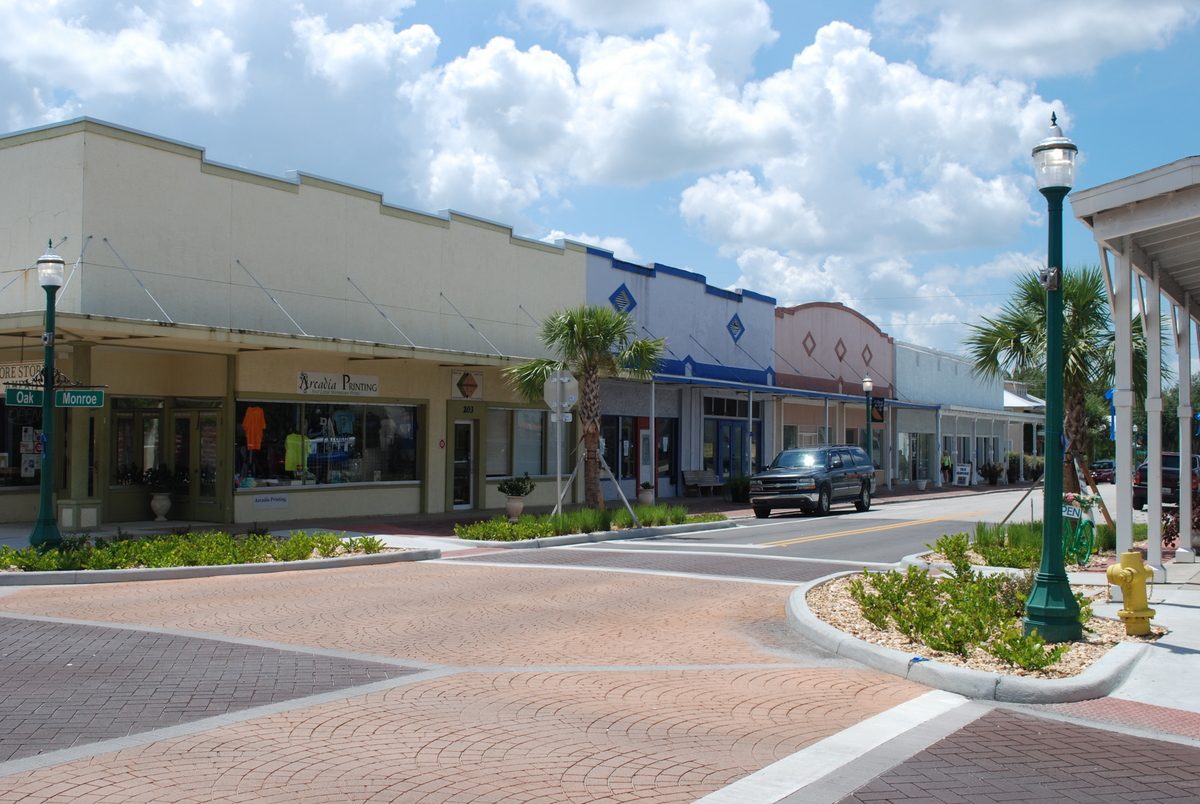
County seat means courthouse. The square is the spine of the town, the reason the streets bend the way they do. Around it sit the brick buildings that define downtown Arcadia. They did not get there by accident.
On Thanksgiving Day, 30 November 1905, fire destroyed the old wooden business district. The entire downtown, gone in an afternoon. Arcadia responded with an ordinance: brick and block only. No more frame construction in the commercial core. That ordinance is why downtown looks the way it does today—solid, low, and built to stay. The fire is not a footnote. It is the reason the town has a face at all.
The Historic District, 1984
In 1984, more than 370 historic homes and businesses in Arcadia were placed on the National Register of Historic Places. Not a single block. Not a few building fronts. Three hundred and seventy properties, a whole town's worth of architecture that survived the fire's aftermath and the century since.
A Florida Historic Marker was installed in 2017, which is the state's way of saying yes, this is real, we have confirmed it. The district covers the downtown and the residential streets around it. You can walk it in an afternoon. You will see the brick ordinance at work, and the houses that came after, built by ranch families who wanted more than a shack. The district is not a museum. It is where people still live and work.
The Rodeo Grounds
Cattle made Arcadia. By the 1920s, ranch families were organizing local rodeos to raise money for schools and civic causes. That is the origin story, and it matters. The rodeo was never a spectacle imported for tourists. It was a fundraiser, a community gathering, a way for working families to pay for things the county would not.
That tradition became the Arcadia All-Florida Championship Rodeo, billed as Florida's oldest and favorite rodeo. The Granddaddy of 'Em All. It runs four days each March, with bareback bronc riding, barrel racing, and bull riding. The 2022 edition ran 10–13 March. The event is the town's defining annual moment, and it has been for a century. It is not a costume. It is the actual thing.
The Present Numbers
The census gives you the current shape of the town. Population: 7,571 people. Median age: 32.7 years. That is a young town, younger than the state average, which means families are staying or moving in. Median household income is $38,388, and the unemployment rate is 5.2 percent.
Housing tells a sharper story. There are 3,405 units total. Only 43 are held for seasonal or recreational use. Think about that. In a state where half the coastline is someone's second home, Arcadia has 43 vacation units out of more than three thousand. The town is not a snowbird destination. It is a place people actually live. Vacant units number 374, which is low for a rural county seat. Median home value is $158,900, and median gross rent is $886. Those are working numbers. They are not Florida prices.
The education figure is the one that gives you pause: 11.8 percent of residents hold a bachelor's degree or higher. That is low. It means Arcadia is not a white-collar town. It is a working town, ranch and agriculture and service jobs, and the rodeo is the economic and cultural engine that keeps it together.
The Historic Marker, 2017
The 2017 marker is the newest landmark, and it is the least dramatic. A plaque. A state acknowledgment. But it matters because it shows the town did not let its history rot. The 1984 National Register listing could have been a plaque-and-forget situation. Arcadia instead kept the district intact, kept the rodeo running, kept the downtown from being demolished and replaced with strip malls.
The marker is the official seal on what the town already knew: that the brick downtown, the courthouse square, the rodeo grounds, and the 370 properties around them are worth keeping. It is not nostalgia. Nostalgia is for places that have nothing better to do. Arcadia has cattle, a rodeo, and a downtown that survived its own destruction. It does not need to step back in time. It never left.
Arcadia is not quaint. It is not a postcard. It is a cattle town with a courthouse, a fire story, a rodeo, and a population of 7,571 people who mostly live here year-round. The landmarks are not monuments. They are the working parts of a town that has been doing the same thing for over a century: raising cattle, raising families, and raising money for the schools by watching people get thrown off horses every March. That is the history. That is the whole history. It is enough.
Every business named above is one we hold a listing for, and every date traces to a source on our sources page. We do not describe menus, interiors or service we have not verified. Details change — confirm before you travel.