Guides · Arcadia, Florida
Arcadia by the Numbers: What the Census Says
The census doesn't tell the whole story, but it tells a true one: Arcadia is a working cattle town of 7,571 people, younger and more affordable than much of Florida, and still holding onto the land that made it.
The Shape of the Town
Arcadia’s numbers start with the land. The town was established as a post office in 1883, incorporated in 1886, and became the county seat of DeSoto County in 1888. That is the official record. The name itself has no surviving origin, though the town tells a story about Arcadia Albritton Coker and a birthday cake. We will not argue with cake.
The population today sits at 7,571. The median age is 32.7 years. That is young for Florida, and it suggests families, not retirees. It suggests people who work here, raise kids here, and stay.
The housing stock backs that up. There are 3,405 total housing units in town. Of those, only 43 are held for seasonal or recreational use. That is barely more than one percent. In a state where half the coast is empty for nine months of the year, Arcadia is the opposite. These are homes, not investments.
The Math of Living Here
The median household income is $38,388. That is not a wealthy town. It is a town where people work for a living, and the work is often cattle, citrus, or the county government. The unemployment rate is 5.2 percent, a touch above the national average but hardly a crisis.
The median home value is $158,900. That is the number that matters. You can still buy a house here for what a studio apartment costs in Miami or Tampa. The median gross rent is $886. That is less than half of what rent runs in many Florida metros. The trade-off is income, but the math still works for a lot of people.
There are 374 vacant housing units. That is about eleven percent of the total. Some of that is normal turnover. Some of it is the old houses that need work. Either way, it means there is room.
The Education Gap
Here is the hard number: 11.8 percent of adults hold a bachelor’s degree or higher. That is well below the state average. It means Arcadia is not a college town. It never was. It is a town where you learn the work by doing it, not by sitting in a lecture hall.
That number also explains why the rodeo matters. By the 1920s, ranch families were organizing local rodeos to raise money for schools and civic causes. That tradition became the town’s defining event. The Arcadia All-Florida Championship Rodeo is billed as Florida’s oldest and favorite rodeo — The Granddaddy of ’Em All. It runs four days each March, with bareback bronc riding, barrel racing, and bull riding. It is not a tourist trap. It is a fundraiser that became an identity.
The Brick and the Fire
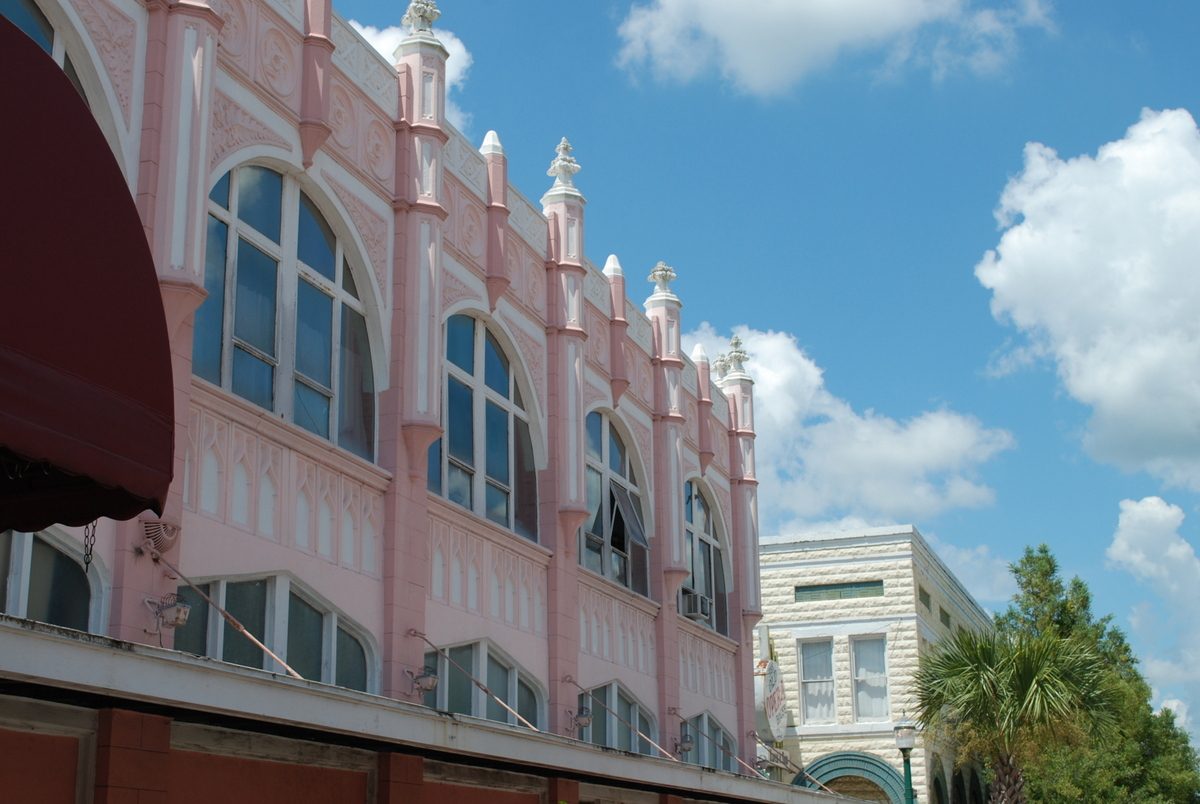
The downtown is brick because the last one burned. On Thanksgiving Day, November 30, 1905, fire destroyed the old wooden business district. The town responded with an ordinance requiring brick and block construction. That is why the historic district still stands.
In 1984, more than 370 historic homes and businesses were placed on the National Register of Historic Places. A Florida Historic Marker was installed in 2017. That is not nostalgia. That is a town that decided, after losing everything once, to build it to last.
Walk the downtown and you see the ordinance at work. The buildings are solid. They are not cute. They are built for heat and hard use, like the people who put them up.
What the Numbers Don’t Say
The census will not tell you about the dust in April or the way the fairgrounds fill up in March. It will not tell you that the rodeo is not a performance but a continuation. The same families who ran cattle here a century ago are still here, and their kids are still riding.
The census will not tell you that the name is a mystery, and the town is fine with that. It will not tell you that a birthday cake story is good enough, because sometimes a good story is better than a true one.
What the census does tell you is this: Arcadia is not a bedroom community. It is not a retirement haven. It is a small, young, affordable town in cattle country, with a brick downtown that survived a fire and a rodeo that outlasted the school fundraisers that started it.
The numbers are modest. The town is not.
Every business named above is one we hold a listing for, and every date traces to a source on our sources page. We do not describe menus, interiors or service we have not verified. Details change — confirm before you travel.