Guides · Arcadia, Florida
The Best Time of Year to Visit Arcadia
The rodeo in March is the honest answer, but it is not the only one.
The Short Answer: March
The Arcadia All-Florida Championship Rodeo runs four days each March, and the 2022 edition fell on 10–13 March. That is the week the town stops pretending to be anything other than what it is: cattle country with a brick downtown. Bareback bronc riding, barrel racing, bull riding—the full program, and the reason the town has its nickname. The Granddaddy of 'Em All is not a marketing phrase. It is a job description.
If you want to see Arcadia at full volume, that is the weekend. Hotels fill. Streets fill. The historic district does what it was built to do. You will not find a quieter version of the town in March, and you should not want one.
The Long Answer: The Rest of the Year
March is the headline, but the town does not shut down after the chutes empty. The census counts 7,571 people here, with a median age of 32.7. That is a young town, and a working one. The unemployment rate sits at 5.2 percent, and the median household income is $38,388. Those numbers do not describe a tourist economy. They describe a place where people live and work, and the calendar reflects it.
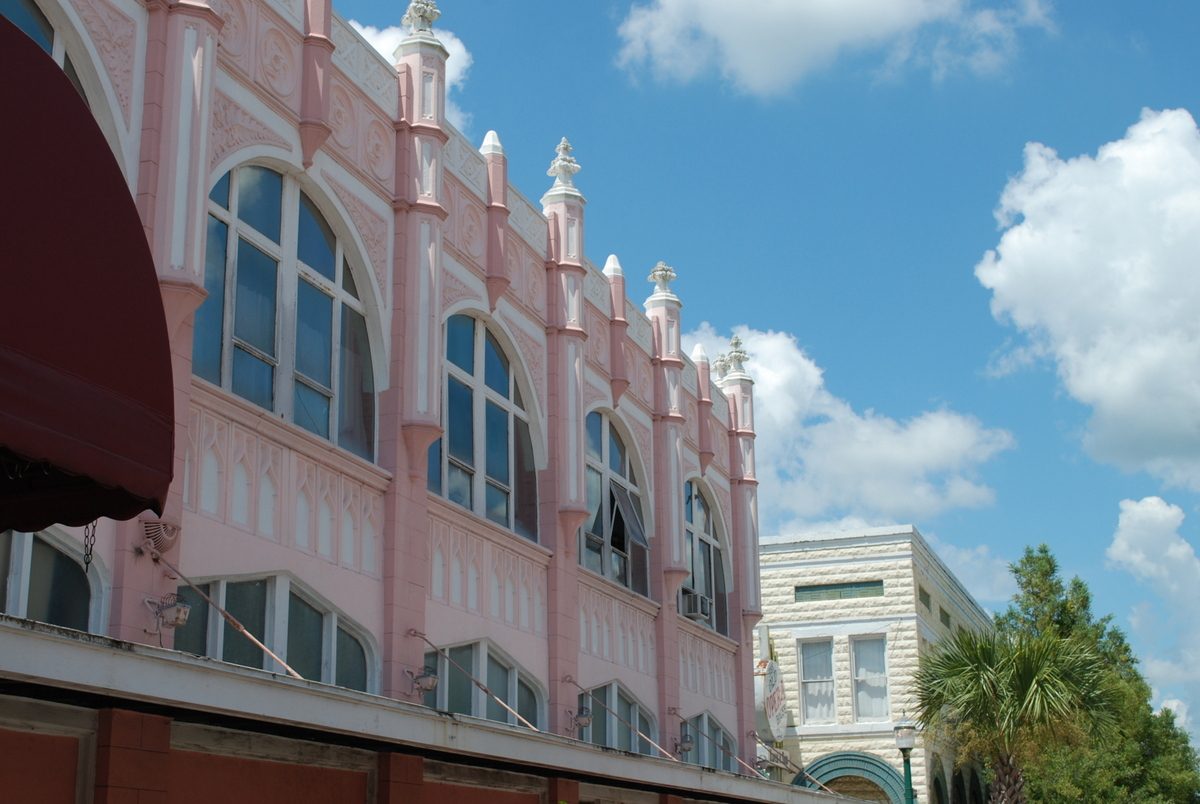
Consider the off-season. From April through February, the rodeo grounds go quiet, and the downtown does what downtowns do when the crowd is local. The historic district—more than 370 homes and businesses listed on the National Register in 1984, with a Florida Historic Marker added in 2017—is not a museum. It is the actual working center of a county seat. DeSoto County was created in 1887, Arcadia became the seat in 1888, and the brick and block buildings you see today exist because the wooden ones burned on Thanksgiving Day, 30 November 1905. The ordinance that followed gave the town its bones. Those bones are best appreciated when you are not shoulder-to-shoulder with rodeo week.
Winter and Fall: The Practical Sweet Spot
The weather does the talking from November through February. Mild days, cool nights, no humidity worth complaining about. This is when the seasonal population shows up—43 housing units out of 3,405 are held for seasonal or recreational use, which is not a snowbird invasion, but it is a signal. The town is a winter destination for people who want Florida without the theme parks. It is also the season when the historic district is easiest to walk. You can read the marker, trace the 1905 rebuild, and get a sense of how a cattle town organized itself without fighting for parking.
Fall is quieter still. The rodeo is a distant memory, the summer heat has broken, and the pace slows to something approaching pastoral. If you want the town's actual rhythm—the one that predates the 1920s ranch families who organized rodeos to fund schools and civic causes—this is the time to catch it.
Summer: Not for Everyone
June through September is honest work. It is hot, it is humid, and the town does not apologize for it. The median home value is $158,900 and median gross rent is $886, which means the cost of living here is low enough that people can endure the summers. If you are visiting, you are doing it for the history or the cattle, not the climate. The rodeo grounds sit empty. The streets are yours. The trade-off is real.
What the Numbers Do Not Tell You
The census says 11.8 percent of residents hold a bachelor's degree or higher. That is a working town, not a college town. It also says 374 housing units are vacant, which means there is room here—room to park, room to walk, room to think. That is a feature, not a flaw.
Arcadia was established as a post office in 1883, incorporated as a town in 1886, and named—according to the story the town tells—for Arcadia Albritton Coker, in thanks for a birthday cake she baked. No documented origin survives. That is the kind of origin story a place keeps when it does not need to prove anything to anyone.
The Verdict
Come in March for the rodeo. That is the event that defines the town, and it is worth the crowd. Come in November or December for the walking-around version. Come in July only if you mean it. Any time you come, the brick is still there, the cattle are still out past the city limits, and the town is still doing what it has done for over a century—working, hosting, and not performing for you. That is the real draw.
Every business named above is one we hold a listing for, and every date traces to a source on our sources page. We do not describe menus, interiors or service we have not verified. Details change — confirm before you travel.